TL;DR: – Emotional intelligence in leadership why it matters comes down to one measurable reality: TalentSmart data shows EQ accounts for approximately 58% of a leader's effectiveness, and nearly 90% of top performers score high in EQ.
- Low-EQ leadership drives disengagement, conflict, and turnover – managers account for up to 70% of the variance in employee engagement, making emotional intelligence a direct performance lever.
- EQ is learnable and measurable. A structured 90-day development framework – grounded in neuroscience and behavioral practice – produces durable change in leadership behavior.
What Is Emotional Intelligence in Leadership?
Emotional intelligence in leadership is the capacity to recognize, understand, and manage your own emotions while accurately reading and responding to the emotions of others – and then using that awareness to lead more effectively. It is not a personality type, a communication style, or a measure of warmth. It is a system of competencies that governs how leaders behave under pressure, how they build trust, and how they shape the culture around them.
As Forbes notes, citing Goleman's foundational research: "The most effective leaders are all alike in one crucial way: They all have a high degree of what has come to be known as emotional intelligence. It's not that IQ and technical skills are irrelevant. They do matter, but they are the entry-level requirements for executive positions."
The concept was first defined academically in 1990 by researchers John Mayer and Peter Salovey, who framed EQ as a cognitive ability – the capacity to perceive, use, understand, and manage emotion. Forbes traces the term's origin to that 1990 research, while Daniel Goleman's 1998 Harvard Business Review article translated it into a practical leadership framework built around five competencies: self-awareness, self-regulation, motivation, empathy, and social skills.
That five-component model remains the dominant practitioner framework today – and it is the architecture this article uses throughout.
Key Takeaway: EQ is not a soft skill or a personality trait. It is a measurable, developable system of competencies that directly determines how effectively a leader performs, communicates, and builds culture.
Why Does Emotional Intelligence Matter for Leaders?
Consider two leaders facing the same board review. Both have equivalent analytical capability. One reacts defensively when challenged, escalates tension, and leaves the room having damaged relationships. The other pauses, acknowledges the tension, reframes the concern, and exits with trust intact. Same IQ. Fundamentally different outcome. That gap is emotional intelligence – and it has measurable organizational consequences.
According to data cited by Indiana Wesleyan University, TalentSmart research found that EQ accounts for approximately 58% of a leader's effectiveness, with nearly 90% of top performers demonstrating high emotional intelligence. The inverse is equally instructive: Business Leadership Today reports that only 20% of bottom performers score high in EQ.
The business case extends across three measurable dimensions:
Employee Retention. Low-EQ leadership is a primary driver of voluntary turnover. Genos International research cited by Indiana Wesleyan found that teams led by high-EQ managers experienced 37% higher productivity and 32% higher engagement – both of which are direct predictors of retention. Turnover is expensive: replacing a mid-level employee typically costs 50–200% of their annual salary.
Team Performance. The University of South Florida identifies that managers account for up to 70% of the variance in employee engagement scores – and that the highest-performing teams share one defining trait: psychological safety, which is a direct output of emotionally intelligent leadership. Building psychological safety as a leader is not incidental to performance; it is the mechanism through which EQ translates into results.
Decision Quality. Harvard Business School research finds that leaders who master empathy perform more than 40% higher in coaching, engaging others, and decision-making. Emotional regulation – the ability to pause before reacting – directly reduces escalation in high-stakes situations and improves the quality of judgment under pressure.
The cost of low EQ is not abstract. Rochemartin notes that a leader with low emotional intelligence may achieve short-term results by driving people hard, but the cost is burnout and high turnover. Harvard Business School adds that every unaddressed conflict wastes approximately eight hours of company time in gossip and unproductive activity.
Key Takeaway: High-EQ leadership teams demonstrate up to 37% higher productivity and 32% higher engagement. The cost of low EQ – in turnover, disengagement, and conflict – is quantifiable and directly tied to manager behavior.
The 5 Core EQ Competencies Every Leader Needs
Self-Awareness
Self-awareness is the foundational EQ competency – without it, leaders cannot accurately assess how their behavior affects others or where their development gaps lie. Harvard Business School reports that while 95% of people believe they are self-aware, only 10 to 15% actually are. That gap is particularly pronounced in senior leaders, where positional authority often reduces honest feedback. A leader who believes they communicate calmly under pressure but consistently triggers defensiveness in their team has a self-awareness deficit – and it shapes every interaction. High: Actively solicits feedback, acknowledges blind spots, adjusts behavior based on impact. Low: Attributes team friction to others, resists critical input, unaware of emotional footprint.
Self-Regulation
Self-regulation is the ability to manage disruptive emotions and impulses – to pause before responding rather than react from instinct. ICAgile describes this as balancing emotions with logic so that leaders use their emotional state as information rather than acting impulsively on it. The board review scenario illustrates this precisely: the leader who pauses, names the tension, and reframes the conversation is exercising self-regulation. The one who reacts defensively is not. High: Maintains composure under pressure, responds deliberately, models emotional stability. Low: Escalates conflict, communicates reactively, creates unpredictability that erodes team trust.
Motivation
Goleman's motivation competency refers specifically to intrinsic drive – the orientation toward achievement for its own sake rather than for external rewards. IHHP frames this as the difference between leaders who are energized by the work itself and those who are primarily driven by status or compensation. Intrinsically motivated leaders set higher standards, persist through setbacks, and transmit that orientation to their teams. High: Pursues goals with energy and persistence, optimistic in the face of failure, raises the standard of those around them. Low: Disengages when external rewards diminish, communicates low ambition, tolerates mediocrity.
Empathy
Empathy is the capacity to understand others' emotional states and factor that understanding into decisions – it is not agreement or accommodation, but accurate perception. Catalyst research found that 76% of employees who experienced empathy from their leaders reported being engaged, compared to only 32% who experienced less empathy. Babson states it directly: "Followership is tied to empathy. Without followership, there is no leadership." Empathy is also the competency most directly linked to giving effective feedback as a senior leader – the ability to deliver difficult truths in a way that the recipient can actually receive. High: Reads the room accurately, adjusts communication style, builds genuine followership. Low: Misreads team dynamics, delivers feedback that damages rather than develops, loses trust.
Social Skills
Social skills represent the integration of the other four competencies into observable relationship behavior – the ability to influence, inspire, manage conflict, and build networks. ICAgile describes relationship management as combining self-awareness, self-management, and social awareness to develop others by building trust. This is where EQ becomes visible to the organization. A leader can have high internal EQ – strong self-awareness and regulation – but if it does not translate into effective communication and collaboration, the organizational impact is limited. High: Builds coalitions, navigates conflict constructively, communicates with clarity and influence. Low: Creates silos, avoids difficult conversations, relies on authority rather than trust.
Key Takeaway: The five EQ competencies are sequential and interdependent. Self-awareness is the foundation; social skills are the output. Leaders who develop all five create environments where authentic leadership effectiveness and team performance compound over time.
How Do You Measure Emotional Intelligence as a Leader?
Three validated assessment frameworks exist for measuring EQ in leadership contexts, each with a distinct methodology and purpose.
EQ-i 2.0 (Multi-Health Systems) is the most widely used leadership EQ assessment, measuring 15 competencies across five composite areas. It is a self-report instrument, meaning it captures how leaders perceive their own emotional functioning. Delivered through certified practitioners, the EQ-i 2.0 typically costs $150–$400 per person including debrief – an investment worth examining through the lens of measuring leadership coaching ROI before committing at scale.
MSCEIT (Mayer-Salovey-Caruso Emotional Intelligence Test) takes a fundamentally different approach: it measures EQ as a cognitive ability, with right and wrong answers, rather than self-report. This makes it more resistant to socially desirable responding and more useful for research contexts.
Genos EI focuses specifically on emotionally intelligent workplace behavior – what leaders do, not what they feel or believe about themselves. Genos International positions this as a behaviorally-focused alternative that is particularly useful for leadership development programs.
For leaders who want an immediate self-diagnostic before investing in formal assessment, use this 10-point scoring framework (rate yourself 1–2 per competency):
| Competency | Indicator A | Indicator B |
|---|---|---|
| Self-Awareness | I can name my emotional state in real time | I actively seek feedback on my blind spots |
| Self-Regulation | I pause before responding under pressure | I rarely escalate conflict reactively |
| Motivation | I pursue goals beyond external rewards | I maintain energy through setbacks |
| Empathy | I accurately read others' emotional states | I adjust my approach based on what I observe |
| Social Skills | I navigate conflict without damaging relationships | I build trust through consistent behavior |
Score interpretation: 1–4 = development priority; 5–7 = functional; 8–10 = strength. Use this as a directional tool, not a substitute for validated assessment.
Key Takeaway: Formal EQ assessment through certified coaches (EQ-i 2.0, MSCEIT, or Genos EI) costs $150–$400 per person and provides validated, actionable data. The 10-point self-scoring framework above offers an immediate starting point for identifying development priorities.
How Can Leaders Develop Emotional Intelligence? (90-Day Plan)
EQ is learnable. ESCP confirms that emotional intelligence is a dynamic skill set that develops over time, especially through feedback, coaching, and practice. The neuroscience supports this: deliberate practice reshapes emotional circuitry through neuroplasticity. Peer-reviewed habit formation research from Lally et al. (European Journal of Social Psychology, 2010) found that behavioral automaticity develops over an average of 66 days – which is why 90-day development cycles, not 21-day programs, produce durable change.
The following framework is structured around Boyatzis' intentional change theory: awareness precedes practice, and practice precedes integration.
Days 1–30: Awareness Phase
The objective in the first 30 days is to establish an accurate baseline – not to change behavior, but to understand it.
- Daily journaling (10 minutes): After significant interactions, record: What emotion did I experience? How did I express it? What was the impact on others?
- Solicit structured feedback: Ask three direct reports and two peers to identify one situation where your emotional response helped the team and one where it created friction.
- Identify one EQ blind spot: Based on journaling and feedback, name the single competency where the gap between your self-perception and others' experience is largest. That is your development priority.
For leaders seeking structured support during this phase, George Dupont Leadership offers leadership coaching and culture transformation work designed to accelerate this awareness cycle with professional facilitation.
Days 31–60: Practice Phase
The objective in the middle 30 days is deliberate behavioral practice in real leadership situations.
- Active listening drills: In every one-on-one meeting, practice full attention – no device, no interruption, reflect back what you heard before responding. Zenger Folkman research found active listening is directly associated with higher trust ratings from direct reports.
- Pause-before-response protocol: In any high-stakes or emotionally charged situation, implement a mandatory 5-second pause before speaking. This single behavioral intervention is the most accessible entry point for self-regulation development.
- Empathy mapping: Before difficult conversations, spend two minutes considering the other person's perspective, pressures, and emotional state. Document what you observe versus what you assumed.
Days 61–90: Integration Phase
The objective in the final 30 days is applying developed EQ competencies in the highest-stakes situations – board presentations, performance conversations, conflict resolution – and measuring the behavioral shift.
- Apply EQ in high-stakes contexts: Deliberately use the pause protocol and empathy mapping in situations where your default pattern would have been reactive.
- Re-assess against baseline: Return to your Day 1 journaling and feedback. What has shifted? Where does the gap remain?
- Establish an accountability partner: Identify a peer or executive coach who will provide ongoing honest feedback. ESCP notes that feedback and coaching are the primary accelerants of EQ development – not self-study alone. For leaders in organizational transition, exploring executive coaching benefits for senior leaders provides a structured framework for sustaining this development beyond the initial 90 days.
Key Takeaway: A 90-day EQ development cycle – awareness, practice, integration – is grounded in neuroscience and habit formation research. The 21-day development myth is contradicted by peer-reviewed evidence showing behavioral automaticity requires an average of 66 days.
EQ vs. IQ: Which Matters More for Leadership Success?
For leadership effectiveness, EQ is the stronger predictor – but the relationship is not a competition. IQ and technical expertise are threshold requirements; EQ determines what a leader does with those capabilities once they are in the role.
IHHP frames this precisely: "While IQ gets you through the door, EI determines how high you climb." Rochemartin adds that IQ accounts for, at best, 10% of the success a leader will experience across their career. Babson is more direct: "Emotional intelligence predicts a battery of outcomes. It seems to be the primary significant driver of performance at the individual and team level. More so than personality traits. More so than IQ."
IQ remains relevant in technical domains, early-career roles, and analytical functions where cognitive processing is the primary performance driver. But as leaders move into roles where they must influence, align, and develop others, EQ becomes the dominant variable. confirms that research consistently shows emotional intelligence is a stronger predictor of leadership effectiveness than IQ or technical expertise.
The practical framing: IQ earns the leadership role. EQ determines how long you keep it, how much your team achieves under you, and what kind of culture you leave behind.
Key Takeaway: IQ is the entry requirement for leadership. EQ is the performance multiplier. For executives and senior leaders, developing emotional intelligence is not a personal development exercise – it is a strategic organizational investment.
Frequently Asked Questions About EQ in Leadership
Can emotional intelligence be learned, or is it innate?
Direct Answer: EQ is learnable. Neuroscience confirms that deliberate practice reshapes emotional circuitry through neuroplasticity, and structured development programs produce measurable behavioral change.
states that emotional intelligence is a dynamic skill set that develops over time, especially through feedback, coaching, and practice. reinforces this: building EQ is not about a personality overhaul – it is about developing specific behavioral skills. The 90-day framework above provides a structured path. Leadership development programs for senior executives that incorporate EQ assessment and coaching accelerate this process significantly.
How does emotional intelligence compare to IQ for leadership effectiveness?
Direct Answer: For leadership roles, EQ is a stronger predictor of effectiveness than IQ. IQ is a threshold requirement; EQ is the performance differentiator.
describes EQ as the primary significant driver of performance at the individual and team level – more so than personality traits or IQ. notes that IQ accounts for at best 10% of career success. The practical distinction: IQ gets you the role; EQ determines your impact in it.
What is the best way to assess emotional intelligence in a leader?
Direct Answer: Three validated tools exist – EQ-i 2.0 (self-report), MSCEIT (ability-based), and Genos EI (behavioral) – each measuring EQ through a different methodology. Choice depends on the development objective.
For leadership development contexts, the EQ-i 2.0 is the most widely used, measuring 15 competencies across five composites through certified practitioner delivery. The MSCEIT is more appropriate for research or selection contexts where objective measurement is required. The 10-point self-scoring framework in this article provides an immediate directional baseline before formal assessment.
What is the cost of formal EQ assessments for leadership development?
Direct Answer: Formal EQ assessments delivered through certified coaches typically cost $150–$400 per person, including the assessment instrument and debrief session.
This range reflects practitioner-mediated delivery of tools like the EQ-i 2.0. Assessment-only licensing varies. The World Economic Forum projects that 40% of core job skills will shift toward adaptability, empathy, and emotional intelligence by 2030 – which contextualizes this investment against the cost of leadership derailment and turnover.
How does low emotional intelligence hurt team performance?
Direct Answer: Low-EQ leadership directly reduces engagement, increases conflict, and drives voluntary turnover – all of which have quantifiable organizational costs.
documents that emotions are contagious from the leader outward: a leader in a negative or reactive emotional state transmits that state to the team, decreasing performance and creativity. Harvard Business School adds that every unaddressed conflict wastes approximately eight hours of company time. The University of South Florida identifies that the most common causes of leadership derailment are tied to emotional shortcomings – difficulty managing change, poor interpersonal relationships, and failure to build trust.
What is the difference between empathy and emotional intelligence in leadership?
Direct Answer: Empathy is one of five competencies within emotional intelligence – it is the capacity to accurately perceive and understand others' emotional states. EQ is the broader system that includes self-awareness, self-regulation, motivation, empathy, and social skills.
A leader can demonstrate empathy in individual interactions while still lacking self-regulation under pressure or the social skills to translate empathy into effective team leadership. EQ as a system requires all five competencies operating together. Catalyst research found that 76% of employees who experienced empathy from their leaders reported being engaged – illustrating empathy's power as a component, while the full EQ system determines whether that empathy translates into sustained organizational performance.
How long does it take to develop emotional intelligence as a leader?
Direct Answer: Meaningful behavioral change in EQ competencies typically requires 60–90 days of deliberate practice, with sustained development continuing over 12–24 months.
Peer-reviewed habit formation research (Lally et al., European Journal of Social Psychology, 2010) found behavioral automaticity develops over an average of 66 days. The 90-day framework in this article is structured around that evidence. notes that coaching and feedback are the primary accelerants – self-study alone produces slower and less durable change.
Leadership Insight: The System Behind the Skill
Emotional intelligence in leadership why it matters is ultimately a question about organizational performance, not personal development. The data is consistent across sources: EQ predicts engagement, retention, decision quality, and team output more reliably than technical expertise or cognitive ability alone. Fewer than 20% of companies qualify as emotionally intelligent organizations – which means the gap between current state and competitive advantage is significant for most leadership teams.
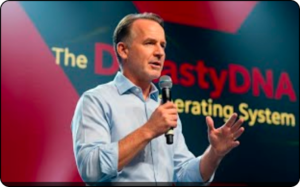
The DynastyDNA Leadership framework treats this directly: talent sets the floor, but leadership and culture set the ceiling. EQ is the mechanism through which leaders raise that ceiling – through observable behavior, consistent standards, and the deliberate development of the five competencies that determine how a leader shows up when it matters most.
For executives and senior leaders ready to move from awareness to structured development, George Dupont Leadership provides leadership coaching and culture transformation work built around these principles – translating EQ competency development into measurable organizational outcomes.
The leaders who build this system do not just perform better individually. They build teams and cultures that outlast any single initiative, quarter, or market condition. That is the ceiling worth raising.
Ready to Get Started?
For personalized guidance, visit Leadership Coaching and Culture Transformation to learn how we can help.