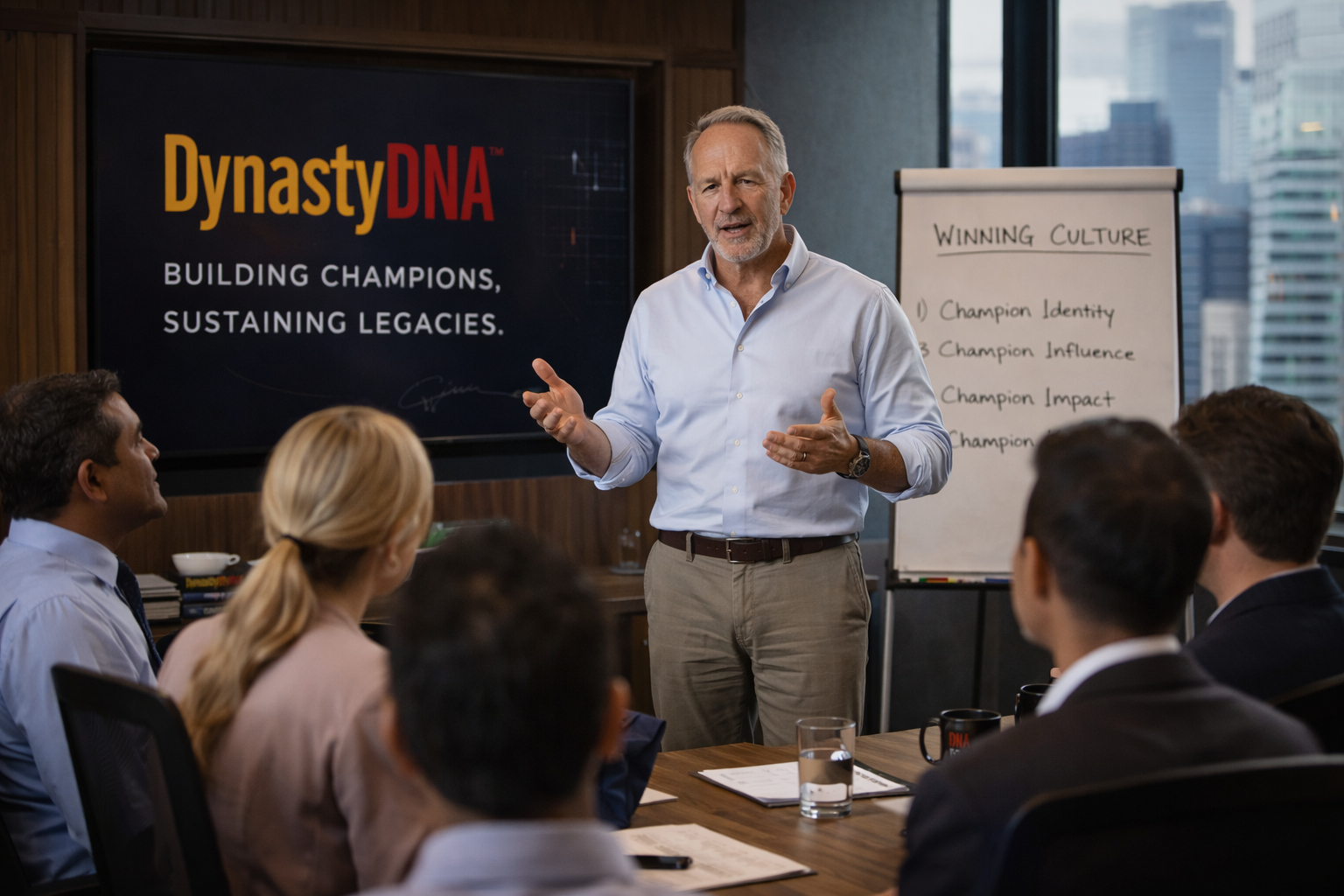
TL;DR: Building a high-performance culture requires more than inspiration – it demands systematic frameworks, measurable accountability, and executive alignment. Companies with winning cultures generate Bain of those without. This guide provides a 90-day diagnostic methodology, an 8-step implementation roadmap with budget ranges ($50K-$250K for 100 employees), and sustainability strategies that prevent burnout while maintaining performance. You'll learn how to translate abstract values into observable behaviors, align performance systems with cultural goals, and measure transformation success through leading indicators.
What Defines a High-Performance Organizational Culture?
A high-performance organizational culture is an environment where people are empowered to make decisions, given resources to execute, and held accountable for delivering results. According to Gartner research, it "results from continually balancing investment in people, processes, physical environment, and technology to measurably enhance the ability of workers to learn, discover, innovate, team, and lead, and to achieve efficiency and financial benefit."
The business impact is substantial. Bain & Company research shows that companies developing a winning culture generate ten times the revenue growth, five times the total shareholder return, and five times the growth in earnings before taxes compared to companies without all three cultural dimensions. These aren't marginal improvements – they represent fundamental competitive advantages.
High-performance cultures share four core characteristics that distinguish them from average organizations:
1. Clear Direction and Accountability
Employees understand strategic priorities and how their work contributes to organizational goals. Research shows that 44% more employees are engaged in companies where culture aligns with strategy, and twice as many employees will stay.
2. Empowerment with Resources
People have decision-making authority and the tools, budget, and support needed to execute. This isn't just delegation – it's providing genuine capability to deliver outcomes.
3. Learning and Development Focus
According to research on organizational knowledge, companies that actively promote a strong learning culture see gains in both financial and overall performance. Performyard have a 57% retention rate, twice the rate for other companies.
4. Psychological Safety with High Standards
Bain research emphasizes that "a high-performance culture energizes and motivates, with a sense of both striving and safety – safety to learn, to make mistakes, and to tackle challenges that are new, big, and complex."
Here's how high-performance cultures compare to low-performance environments across key metrics:
| Metric | High-Performance Culture | Low-Performance Culture |
|---|---|---|
| Revenue Growth | 10x baseline | 1x baseline |
| Total Shareholder Return | 5x baseline | 1x baseline |
| Employee Engagement | 44% higher | Baseline |
| Retention Rate | 2x industry average | Industry average |
| Turnover Cost Impact | Minimal | 75% likely to leave |
Key Takeaway: High-performance cultures deliver measurable business outcomes – 10x revenue growth and 5x TSR – by balancing empowerment, accountability, and psychological safety. These aren't soft metrics; they're competitive advantages that show up in financial statements.
Why Do Most Culture Initiatives Fail?
Five failure patterns dominate culture transformation efforts. Aon report that their cultures do not align with business objectives. Even more concerning, 71% of employees are either passive or actively disengaged, and 75% are likely to leave in companies with misaligned cultures. The cost of this misalignment extends beyond engagement scores – it directly impacts execution speed, innovation capacity, and financial performance.
1. Executive Team Misalignment (82% failure rate)
When executive teams lack alignment on culture priorities, initiatives fail regardless of budget or methodology quality. Research shows that while 85% of organizations report that leadership is as committed to building inclusive cultures as a year ago, only 38% of leaders regularly use tools that reduce bias. This gap between stated commitment and behavioral change undermines credibility.
2. Values Remain Abstract
Most organizations define values like "innovation" or "collaboration" without translating them into specific, observable behaviors. According to Gallup research, only 27% of employees strongly believe in their organization's values. When values exist only as wall posters rather than behavioral expectations, they become meaningless.
3. Performance Systems Stay Unchanged
Culture initiatives fail when performance reviews, compensation structures, and promotion criteria continue rewarding old behaviors. If you say you value collaboration but only reward individual achievement, employees quickly learn what actually matters.
4. Middle Management Resistance
Middle managers – the layer between executives and frontline employees – often become bottlenecks. They face competing demands: execute the new culture while maintaining current performance metrics. Without explicit support and role modeling from above, they default to familiar patterns.
5. No Measurement Framework
What gets measured gets managed. Culture initiatives without clear leading indicators (manager one-on-one quality, decision speed) and lagging indicators (engagement, retention, performance) lack the feedback loops necessary for course correction.
The financial cost of failed culture initiatives is substantial. For a 100-employee company, a failed transformation represents not just the direct investment ($50K-$250K) but also opportunity cost, employee cynicism, and competitive disadvantage. Each failed attempt makes the next one harder as employees develop "change fatigue" and skepticism about leadership commitment.
Key Takeaway: Culture initiatives fail when executive teams lack alignment (82% failure rate), values remain abstract rather than behavioral, and performance systems continue rewarding old patterns. Success requires measurement frameworks, middle management support, and genuine executive commitment beyond stated intentions.
The 6-Element Framework for High-Performance Culture
Building a high-performance culture requires a systematic framework that addresses interconnected organizational elements. This framework synthesizes research from multiple sources into actionable components that CEOs and executive teams can implement.
Clear Direction and Purpose
Direction means every employee can articulate the organization's strategic priorities and how their work contributes to those goals. This isn't about mission statements – it's about operational clarity.
Leadership Behaviors:
- Start meetings by connecting agenda items to strategic priorities
- at the beginning of sales reviews rather than diving into numbers
- Eliminate initiatives that don't directly support top three strategic priorities
- Make trade-off decisions transparent so employees understand prioritization logic
Assessment Questions:
- Can frontline employees explain the company's top three strategic priorities?
- Do team goals cascade logically from organizational strategy?
- When was the last time you eliminated an initiative to maintain focus?
Accountability and Ownership
Accountability in high-performance cultures means employees have both the authority to make decisions and clear responsibility for outcomes. Research emphasizes that "people are empowered to make decisions. They are given the resources to get things done. And they are held accountable for delivering results."
Leadership Behaviors:
- Define decision rights explicitly (who decides, who consults, who informs)
- Provide budget authority at appropriate levels
- Review outcomes, not just activities, in performance conversations
- Hold public retrospectives on both successes and failures
Assessment Questions:
- What decisions can managers make without escalation?
- Do employees have budget authority to solve customer problems?
- How quickly can teams pivot when data shows a strategy isn't working?
For companies at different stages, accountability looks different. Startups (50-100 employees) need broad decision rights with frequent check-ins. Mid-size companies (100-500 employees) require more structured decision frameworks but should avoid bureaucracy. The key is matching accountability structures to organizational complexity.
Continuous Learning and Development
Performyard have a 57% retention rate for employees, twice the rate for other companies. Learning culture isn't about training budgets – it's about creating environments where experimentation, failure analysis, and skill development are embedded in daily work.
Leadership Behaviors:
- Share your own learning publicly (books, courses, mistakes)
- Allocate 10-15% of team time to skill development
- Conduct "failure retrospectives" that focus on learning, not blame
- Rotate employees through cross-functional projects
Assessment Questions:
- What percentage of work time is dedicated to learning?
- How many employees have changed roles internally in the past year?
- Do performance reviews include learning goals alongside outcome goals?
Collaboration and Coordination
High-performance cultures balance autonomy with coordination. Teams need independence to move quickly while maintaining alignment with broader organizational goals.
Leadership Behaviors:
- Establish clear interfaces between teams (handoff points, communication protocols)
- Create cross-functional working groups for strategic initiatives
- Use shared metrics that require collaboration to achieve
- Reduce meeting overhead while increasing information transparency
One study found that "one first-time manager at a leading mechanical engineering firm spends about a third of his week in one-on-one meetings with his direct reports." The solution isn't eliminating coordination – it's making it efficient. Research suggests "every team should have just three weekly meetings: prioritization on Monday; problem solving midweek; and 'pencils down' on Friday."
Assessment Questions:
- Do meetings have clear purposes and produce decisions?
- Can teams access information without excessive coordination?
- Are collaboration tools reducing or increasing friction?
Inspiration and Energy
Inspiration in high-performance cultures comes from meaningful work, not motivational speeches. Research shows that employees are 54% more likely to stay with a company for 5 years due to alignment with the company's mission, and they are 30% more likely to grow into high performers compared to those who are only at work for a paycheck.
Leadership Behaviors:
- Connect daily work to customer impact through stories and data
- Celebrate progress, not just final outcomes
- Provide visibility into how individual contributions affect company success
- Remove obstacles that prevent employees from doing their best work
Assessment Questions:
- Can employees articulate why their work matters?
- Do recognition systems highlight both results and methods?
- How quickly are roadblocks identified and removed?
Vitality and Sustainability
High performance without sustainability leads to burnout. Harvard research found that 40% of employees cited burnout as the top reason for leaving their jobs. The framework must include recovery mechanisms.
Leadership Behaviors:
- Model work-life boundaries (don't send emails at midnight)
- Mandate vacation usage and disconnection
- Monitor workload distribution across teams
- Provide mental health resources and normalize their use
Assessment Questions:
- What percentage of available vacation time is actually used?
- Do employees report sustainable workloads?
- Are recovery periods built into project timelines?
Key Takeaway: The six-element framework – direction, accountability, learning, collaboration, inspiration, and vitality – provides a systematic approach to culture building. Each element requires specific leadership behaviors, not just stated values. Startups need broad decision rights with frequent check-ins; mid-size companies need structured frameworks without bureaucracy.
How to Assess Your Current Culture (90-Day Diagnostic)
Before implementing culture changes, you need a clear baseline. This 90-day diagnostic provides quantitative and qualitative data to identify gaps between current and desired culture.
Days 1-30: Quantitative Data Collection
Launch an anonymous employee survey covering the six framework elements. Target 80%+ response rate – research shows that response rates above 80% indicate sufficient psychological safety for honest feedback, while rates below 60% suggest fear-based climates.
Survey questions should include:
- "I understand how my work contributes to company strategy" (1-10 scale)
- "I have the authority to make decisions necessary for my role" (1-10 scale)
- "I receive regular feedback on my performance" (1-10 scale)
- "I feel safe admitting mistakes and asking for help" (1-10 scale)
- "My workload is sustainable long-term" (1-10 scale)
Collect operational metrics:
- Voluntary turnover rate by department and tenure
- Time-to-fill for open positions
- Internal promotion rate
- Training hours per employee
- Average tenure by role level
Days 31-60: Qualitative Interviews
Conduct 15-25 structured interviews across hierarchical levels, tenure ranges, and functions. This sample size typically reaches saturation – the point where additional interviews yield diminishing new insights.
Interview protocol:
- "Describe a recent decision you made. What approvals did you need?"
- "Tell me about a time you tried something new. What happened?"
- "How do you know if you're succeeding in your role?"
- "What would you change about how we work if you could?"
- "Describe our culture to someone considering joining the company."
Focus on behavioral examples, not opinions. When someone says "we value innovation," ask "Give me an example of innovation you've seen this month."
Days 61-90: Behavioral Observation and Analysis
Attend key meetings as an observer:
- Executive team strategy sessions
- Department planning meetings
- Cross-functional project reviews
- All-hands company meetings
Observe:
- Who speaks? Who doesn't?
- How are decisions made? (Data-driven? Consensus? Authority?)
- How is disagreement handled?
- What behaviors get rewarded in real-time? (Whose ideas get implemented?)
Analyze artifacts:
- Performance review templates (What gets measured?)
- Promotion criteria (What behaviors lead to advancement?)
- Meeting agendas and notes (How is time allocated?)
- Internal communications (Tone, transparency, frequency)
Red Flags Requiring Immediate Intervention:
- Survey response rate below 60%
- Voluntary turnover above 20% annually in key roles
- More than 30% of employees report burnout symptoms
- Significant gaps between executive and employee perceptions
- Consistent themes of fear, politics, or lack of transparency in interviews
Synthesis and Reporting:
Create a diagnostic report with:
- Current state assessment across six framework elements (scored 1-10)
- Gap analysis between current and desired state
- Priority areas based on business impact and feasibility
- Specific behavioral examples (quotes, observations)
- Recommended focus areas for transformation
For a 100-person company, budget $15K-$25K for this diagnostic if using external support, or allocate 40-60 hours of internal HR/leadership time plus survey tool costs ($2K-$5K).
Key Takeaway: A 90-day diagnostic combines quantitative surveys (targeting 80%+ response rate), 15-25 qualitative interviews, and behavioral observation to establish baseline culture metrics. Red flags include response rates below 60%, turnover above 20%, and significant executive-employee perception gaps. Budget $15K-$25K externally or 40-60 internal hours.
Building High-Performance Culture: 8-Step Implementation Plan
Culture transformation requires 12-18 months for measurable behavior change. This roadmap provides specific actions, timelines, and resource requirements for each phase.
Step 1: Secure Executive Alignment (Months 1-2)
Culture change fails without executive team unity. Research shows that senior leaders have the greatest relative impact on creating a high-performance culture.
Actions:
- Conduct executive team offsite (2 days) to define target culture
- Align on 3-5 core values with specific behavioral definitions
- Identify personal behavior changes each executive will model
- Establish executive team accountability mechanisms (peer feedback, culture scorecards)
Resource Allocation:
- Time: 40 hours executive team time
- Budget: $10K-$20K (facilitator, offsite venue)
- People: CEO, direct reports, optional external facilitator
Success Metrics:
- 100% executive team agreement on target culture definition
- Each executive commits to 2-3 specific behavior changes
- Quarterly executive culture reviews scheduled
Organizations like Leadership Coaching and Culture Transformation specialize in facilitating these executive alignment sessions, helping leadership teams move from abstract values to concrete behavioral commitments that drive measurable culture change.
Step 2: Define Cultural Values and Behaviors (Months 2-3)
Abstract values like "integrity" or "innovation" mean nothing without behavioral translation. Research emphasizes that "culture is based on behaviors that become habits. Changing behaviors is the only way to truly impact the culture."
Actions:
- For each value, define 3-5 observable behaviors at different levels
- Create "looks like/doesn't look like" examples for each behavior
- Test behavioral definitions with employee focus groups
- Develop culture playbook with specific scenarios
Example Translation:
Value: "Customer Obsession"
- Behaviors: "Spends 2+ hours monthly with customers," "Shares customer feedback in team meetings," "Makes trade-off decisions with customer impact as primary criterion"
- Looks like: Starting product meetings with customer pain points
- Doesn't look like: Building features without customer validation
Resource Allocation:
- Time: 60 hours (executive team + HR)
- Budget: $5K-$10K (focus groups, design)
- People: HR lead, executive sponsors, employee representatives
Step 3: Align Systems and Processes (Months 3-6)
Culture lives in systems, not posters. Every organizational process either reinforces or undermines desired culture.
Actions:
- Audit hiring criteria and interview questions for culture alignment
- Revise onboarding to emphasize cultural behaviors in first 90 days
- Update performance review templates to include cultural behaviors (40-60% weight)
- Align compensation and promotion criteria with cultural values
- Review meeting structures and decision-making processes
Example System Alignment:
If you value "innovation," hiring should assess experimentation mindset, performance reviews should reward calculated risk-taking, and promotion criteria should include "tried new approaches" alongside "delivered results."
Resource Allocation:
- Time: 120 hours (HR + department leads)
- Budget: $20K-$40K (process redesign, tools, training materials)
- People: HR team, department heads, legal review
Step 4: Implement Performance Management Changes (Months 4-7)
Performance management is the most powerful culture lever. Research shows that when companies build a culture for everyone, they see 56% higher job performance.
Actions:
- Train managers on new performance criteria (cultural behaviors + outcomes)
- Implement regular feedback cadence (weekly check-ins, quarterly reviews)
- Create peer feedback mechanisms for collaboration assessment
- Establish clear consequences for high performers who violate cultural values
Critical Decision:
What happens when someone delivers results but violates cultural values? High-performance cultures make the hard choice: they exit these individuals. Keeping them sends a clear message that culture doesn't actually matter.
Resource Allocation:
- Time: 80 hours (manager training, system setup)
- Budget: $15K-$30K (training, performance management tools)
- People: HR, all managers, executive sponsors
Step 5: Launch Communication and Education Campaign (Months 3-9)
Research emphasizes that "the most effective kind of communication to accomplish this goal is story telling." Employees learn culture through stories, not memos.
Actions:
- Monthly all-hands meetings highlighting culture examples
- Internal newsletter featuring employees modeling desired behaviors
- Manager training on culture conversations and coaching
- Create culture ambassador program (volunteer employees)
Communication Cadence:
- Weekly: Culture stories in team meetings
- Monthly: All-hands culture spotlight
- Quarterly: Culture progress dashboard shared company-wide
Resource Allocation:
- Time: 40 hours monthly (communications, events)
- Budget: $10K-$20K (materials, events, recognition)
- People: Communications lead, culture ambassadors
Step 6: Develop Middle Management Capability (Months 6-12)
Research shows that "seventy percent of workers' experience is based on manager behavior." Middle managers make or break culture transformation.
Actions:
- Intensive manager development program (culture coaching, feedback skills)
- Peer learning groups for managers to share challenges
- Executive shadowing opportunities
- Manager-specific culture metrics and accountability
Resource Allocation:
- Time: 120 hours (program design + delivery)
- Budget: $30K-$60K (training, coaching, tools)
- People: HR, external coaches, executive mentors
Step 7: Embed in Daily Operations (Months 9-15)
Culture becomes real when it's embedded in how work gets done, not treated as a separate initiative.
Actions:
- Integrate culture criteria into project retrospectives
- Add culture discussion to standing meeting agendas
- Create decision-making frameworks that reference values
- Establish culture metrics in department dashboards
Example Integration:
In sprint retrospectives, add "How did we demonstrate our values this sprint?" alongside "What did we ship?"
Resource Allocation:
- Time: 60 hours (process integration)
- Budget: $10K-$15K (tools, templates)
- People: Department leads, project managers
Step 8: Measure, Iterate, and Sustain (Months 12-18+)
Culture transformation is never "done." It requires ongoing measurement and adjustment.
Actions:
- Quarterly culture surveys (pulse checks on key metrics)
- Annual comprehensive culture assessment
- Regular executive team culture reviews
- Continuous refinement of behavioral definitions based on feedback
Resource Allocation:
- Time: 40 hours quarterly (measurement, analysis, adjustment)
- Budget: $15K-$25K annually (survey tools, analysis)
- People: HR analytics, executive team
Total Investment Summary (100-employee company):
- Time: 600-800 hours over 18 months
- Budget: $115K-$240K
- People: Executive team, HR, all managers, culture ambassadors
Quick Wins vs. Long-Term Investments:
Quick wins (90 days):
- Executive team alignment visible to organization
- First culture stories shared in all-hands
- Updated job descriptions with cultural criteria
- Manager training launched
Long-term investments (12-18 months):
- Performance management system fully aligned
- Measurable behavior change across organization
- Culture embedded in daily operations
- Sustainable feedback and measurement systems
Key Takeaway: Culture transformation requires 12-18 months and $115K-$240K for a 100-employee company. The 8-step roadmap prioritizes executive alignment first, then systems alignment, with quick wins in 90 days (visible executive commitment, updated job descriptions) and sustained change by month 18 (embedded behaviors, aligned performance systems).
How Do You Maintain High Performance Without Burnout?
You maintain high performance without burnout by building psychological safety into your culture, establishing sustainable work practices, and monitoring leading indicators of exhaustion. Research shows that 40% of employees cite burnout as the top reason for leaving their jobs, making sustainability a business imperative, not just a wellness concern.
The distinction between toxic high-achievement cultures and sustainable high-performance cultures is critical. Toxic cultures drive short-term results through fear, unrealistic expectations, and hero worship. Sustainable cultures achieve results through clarity, capability building, and recovery protocols.
Psychological Safety Integration
Psychological safety – the belief that you won't be punished for mistakes, questions, or disagreement – is the foundation of sustainable performance. Without it, employees hide problems until they become crises, avoid innovation due to failure risk, and burn out from the stress of maintaining appearances.
Building Psychological Safety:
- Leaders share their own mistakes and learning publicly
- Meetings include explicit "what concerns do we have?" discussions
- Failure retrospectives focus on system improvement, not individual blame
- Disagreement with leadership is rewarded when done constructively
Warning Signs of Toxic High-Performance Culture:
- "Always on" expectations (emails at midnight, weekend work normalized)
- Hero worship of employees who sacrifice personal life
- Punishment of mistakes rather than learning from them
- Competition between team members rather than collaboration
- Lack of recovery time between intense work periods
Sustainable Performance Metrics
Track both performance and sustainability indicators:
| Performance Indicators | Sustainability Indicators |
|---|---|
| Revenue per employee | Average work hours per week |
| Project completion rate | Vacation days taken |
| Customer satisfaction | Sick days used |
| Innovation rate | Employee energy scores |
| Quality metrics | Turnover in high performers |
If performance indicators rise while sustainability indicators decline, you're borrowing from the future. This pattern predicts burnout, turnover, and eventual performance collapse.
Work-Life Balance Indicators
Research indicates that twenty-five percent of remote workers report being lonely, highlighting that balance isn't just about hours – it's about connection, meaning, and recovery.
Practical Balance Mechanisms:
- Core collaboration hours (e.g., 10am-3pm) with flexible time outside that window
- Meeting-free blocks for deep work
- Mandatory vacation minimums (with actual disconnection)
- Workload reviews in one-on-ones
- Team capacity planning that includes buffer time
Recovery Protocols
High-performance athletes don't train at maximum intensity constantly – they cycle between intense effort and recovery. Organizations need the same approach.
Recovery Practices:
- Sprint-based work with defined end points and recovery periods
- Post-launch retrospectives followed by lighter work weeks
- Quarterly planning that includes capacity for unexpected demands
- Sabbatical programs for long-tenured employees
- Mental health days without requiring medical justification
Leadership Role Modeling
Research emphasizes that "leaders are the source of organizational culture change. It's not enough to say the 'right things.' Because employees learn by experiencing behavioral cues. They watch to see if the leader's actions align with their words."
If you tell employees to maintain work-life balance while sending emails at 11pm, they learn that balance is lip service. If you take vacation and truly disconnect, you give permission for others to do the same.
Key Takeaway: Sustainable high performance requires psychological safety (where mistakes drive learning, not punishment), balanced metrics (tracking both performance and sustainability indicators like vacation usage and work hours), and recovery protocols (sprint-based work with defined rest periods). Leaders must model boundaries – sending midnight emails undermines stated balance commitments.
Measuring Culture Transformation Success
Culture transformation requires both leading indicators (predictive behaviors) and lagging indicators (outcome metrics) measured on a quarterly cadence. Without measurement, culture initiatives become feel-good exercises disconnected from business results.
Leading Indicators (Predictive Metrics)
Leading indicators predict culture outcomes 6-12 months before they appear in engagement surveys or financial results. They focus on observable behaviors and operational patterns.
Key Leading Indicators:
- Manager one-on-one frequency and quality (tracked via calendar analysis)
- Decision-making speed (time from proposal to decision)
- Cross-functional collaboration instances (project participation)
- Learning activity participation (training hours, internal mobility)
- Feedback exchange frequency (peer feedback, upward feedback)
- Meeting efficiency (agenda adherence, action item completion)
Example Measurement:
Track "time from customer complaint to resolution decision." If this metric improves from 5 days to 2 days, it indicates increased empowerment and accountability – leading indicators of culture change – before those changes show up in customer satisfaction scores.
Lagging Indicators (Outcome Metrics)
Lagging indicators measure the results of culture change. They confirm whether leading indicator improvements translate to business outcomes.
Key Lagging Indicators:
- Employee engagement scores (quarterly pulse surveys)
- Voluntary turnover rate (overall and by performance level)
- Internal promotion rate
- Revenue per employee
- Customer satisfaction (NPS, CSAT)
- Innovation metrics (new products, patents, experiments run)
- Time to productivity for new hires
Business Outcome Correlation
The goal isn't just improving culture metrics – it's demonstrating business impact. Research shows that companies that excel in culture outperform the market by 16.5%.
Correlation Analysis Example:
- Engagement increases from 62% to 78% (lagging indicator)
- Correlates with 23% revenue growth (business outcome)
- Driven by improved manager one-on-one quality (leading indicator)
Track these correlations quarterly to understand which culture levers drive which business outcomes in your specific context.
Quarterly Measurement Cadence
| Quarter | Leading Indicators | Lagging Indicators | Business Outcomes |
|---|---|---|---|
| Q1 | Baseline measurement | Baseline measurement | Baseline measurement |
| Q2 | Track changes | Early signals | Minimal change expected |
| Q3 | Validate improvements | Moderate changes | Some correlation visible |
| Q4 | Sustained patterns | Significant changes | Clear correlation |
Sample Dashboard Metrics
Create a culture dashboard visible to all employees:
Culture Health Score (Composite):
- Direction clarity: 7.2/10 (↑ from 6.1)
- Accountability: 6.8/10 (↑ from 5.9)
- Learning culture: 7.5/10 (↑ from 6.8)
- Collaboration: 7.1/10 (→ from 7.0)
- Inspiration: 6.9/10 (↑ from 6.2)
- Vitality: 6.5/10 (↓ from 6.8) ⚠️
The vitality decline in this example would trigger investigation – are teams burning out? Is workload sustainable?
ROI Calculation Example
For a 100-employee company investing $150K over 18 months:
Costs:
- Direct investment: $150K
- Opportunity cost (leadership time): $50K
- Total investment: $200K
Returns (Year 2):
- Reduced turnover (10% improvement × $75K replacement cost × 10 employees): $75K
- Productivity improvement (5% × $100K average salary × 100 employees): $500K
- Revenue growth (attributed to culture, conservative 3%): $180K (on $6M revenue base)
- Total returns: $755K
ROI: 278% over 2 years
This calculation is conservative – it doesn't include innovation improvements, customer satisfaction gains, or employer brand value.
Adjustment Triggers
Establish clear triggers for course correction:
- Any metric declining for 2 consecutive quarters
- Significant gaps between departments (indicates inconsistent implementation)
- Leading indicators improving but lagging indicators flat (implementation not reaching frontline)
- Business outcomes not correlating with culture improvements (wrong metrics or external factors)
Key Takeaway: Measure culture transformation through leading indicators (manager one-on-one quality, decision speed) that predict outcomes 6-12 months early and lagging indicators (engagement, turnover, revenue per employee) that confirm business impact. A 100-employee company investing $200K typically sees 278% ROI over 2 years through reduced turnover, productivity gains, and revenue growth.
Frequently Asked Questions
How long does it take to build a high-performance culture?
Direct Answer: Building a high-performance culture requires 12-18 months for measurable behavior change and 24-36 months for full institutionalization across the organization.
The timeline varies by company size and starting point. Smaller organizations (50-100 employees) can achieve meaningful change in 12-15 months due to shorter communication chains and faster decision-making. Larger organizations (500+ employees) typically need 24-36 months as changes must cascade through multiple management layers. Quick wins appear in 90 days (visible executive alignment, updated processes), but sustained behavioral change requires consistent reinforcement over multiple quarters.
What is the cost of implementing a culture transformation initiative?
Direct Answer: For a 100-employee company, comprehensive culture transformation costs $115K-$240K over 18 months, including diagnostic work, executive alignment, system redesign, training, and measurement.
This breaks down to approximately $1,150-$2,400 per employee. Costs include external facilitation ($30K-$60K), survey and measurement tools ($10K-$20K), training and development ($40K-$80K), communication and events ($15K-$30K), and program management ($30K-$50K). Companies can reduce costs by using internal resources, but this increases the time investment (600-800 hours of leadership and HR time). The ROI typically reaches breakeven at 12-18 months through reduced turnover, productivity improvements, and revenue growth.
How is high-performance culture different from toxic high-achievement culture?
Direct Answer: High-performance cultures balance results with psychological safety and sustainability, while toxic cultures drive short-term results through fear, unrealistic expectations, and burnout.
Toxic high-achievement cultures celebrate "heroes" who sacrifice personal life, punish mistakes, and create competition between team members. Sustainable high-performance cultures achieve results through clarity, capability building, and recovery protocols. They reward learning from failures, promote collaboration over competition, and model work-life boundaries. The key difference: toxic cultures extract performance unsustainably; high-performance cultures build capacity for sustained excellence.
What metrics should executives track to measure culture change?
Direct Answer: Track leading indicators (manager one-on-one quality, decision speed, cross-functional collaboration) that predict change 6-12 months early, plus lagging indicators (engagement, turnover, revenue per employee) that confirm business impact.
Leading indicators include: manager one-on-one frequency and quality, time from proposal to decision, cross-functional project participation, learning activity engagement, and feedback exchange frequency. Lagging indicators include: quarterly engagement scores, voluntary turnover rate (especially among high performers), internal promotion rate, revenue per employee, customer satisfaction, and innovation metrics. Measure both quarterly and track correlations between culture improvements and business outcomes. A culture dashboard visible to all employees increases transparency and accountability.
Can you build high-performance culture in remote or hybrid teams?
Direct Answer: Yes, but remote and hybrid cultures require intentional design around asynchronous communication, explicit transparency, and structured connection rituals that replace informal office interactions.
Remote culture-building requires 30-50% more explicit communication than co-located teams. Key practices include: documentation-first communication (write down decisions, context, and rationale), asynchronous recognition systems (public channels for peer appreciation), structured onboarding with 2-3x more touchpoints than in-person programs, virtual rituals (weekly team connections, monthly all-hands), and over-indexed transparency (share context proactively rather than waiting for questions).
What role does the CEO play in culture transformation?
Direct Answer: The CEO is the primary culture architect – responsible for defining target culture, modeling desired behaviors consistently, holding executives accountable, and making visible trade-offs that demonstrate cultural priorities.
Research emphasizes that "leaders are the source of organizational culture change." The CEO's role includes: facilitating executive team alignment on culture definition, personally modeling every behavior expected of others, making high-stakes decisions that reinforce cultural values (like exiting high performers who violate values), allocating resources to culture initiatives, and communicating culture priorities consistently in every forum. Culture change fails when CEOs delegate it to HR – it must be a CEO-led strategic priority with executive team ownership.
How do you maintain high performance during rapid growth?
Direct Answer: Maintain culture during rapid growth by over-investing in onboarding, promoting culture carriers into leadership, documenting behavioral expectations explicitly, and slowing hiring when culture dilution appears.
Rapid growth (50%+ annual headcount increase) is the highest-risk period for culture dilution. Protective strategies include: structured 90-day onboarding that emphasizes culture alongside role training, promoting internal employees who embody culture into management roles (even if external candidates have stronger resumes), creating culture ambassador programs where tenured employees mentor new hires, documenting culture explicitly in playbooks and decision frameworks, and establishing "culture gates" in hiring (multiple interviewers assess culture-add, not just skills). Some companies intentionally slow hiring when culture metrics decline, recognizing that protecting culture is more valuable than hitting growth targets.
What are the biggest mistakes leaders make when building performance culture?
Direct Answer: The biggest mistakes are treating culture as an HR initiative rather than a CEO priority, keeping values abstract without behavioral translation, and failing to align performance systems with stated cultural values.
Common failures include: delegating culture to HR instead of leading it from the executive team, defining values without translating them into observable behaviors, continuing to reward old behaviors while talking about new culture, launching culture initiatives without executive team alignment, avoiding hard decisions (like exiting high performers who violate values), measuring culture without connecting it to business outcomes, and treating culture as a one-time project rather than ongoing work.
Building a high-performance organizational culture isn't a soft initiative – it's a strategic imperative that drives measurable business outcomes. Companies with winning cultures achieve ten times the revenue growth and five times the total shareholder return of their competitors. But transformation requires more than inspiration; it demands systematic frameworks, executive alignment, behavioral specificity, and sustained measurement.
The 90-day diagnostic establishes your baseline. The 8-step implementation roadmap provides the structure for 12-18 months of focused work. The measurement framework ensures you're tracking both leading indicators (manager behaviors, decision speed) and lagging indicators (engagement, turnover, revenue) that confirm business impact.
Culture transformation is never "done" – it's an ongoing practice of alignment, measurement, and adjustment. But the organizations that commit to this work create sustainable competitive advantages that compound over time. Start with executive team alignment, translate values into behaviors, align your systems, and measure relentlessly. The investment pays returns that show up in your financial statements, not just your engagement surveys.
Ready to begin? Start with the 90-day diagnostic to understand your current state, then secure executive alignment on your target culture. The framework is clear; the question is whether you're ready to do the work.